Why Do We Give Socks for Christmas? The Story Might Surprise You
Nov 2, 2026 • Grace Micere
>
It's Christmas morning, you've torn through the wrapping paper, and there it is. A pair of socks. Maybe you smile politely. Maybe you laugh because, once again, someone has decided your feet need a present.
Interestingly, giving socks as gifts is a tradition with centuries of history, a few fascinating legends, and a surprisingly heartwarming meaning. In fact, socks weren't always considered the practical, slightly predictable presents we know today. Once upon a time, receiving a pair could be something rather special.
Today, we’ll unravel the story of how we went from gifting socks out of necessity to making them a Christmas tradition.
It All Started with a Man Named Saint Nicholas
Let’s travel back roughly 1,700 years to the time of Saint Nicholas to understand why we give socks at Christmas.
Long before Santa Claus became the jolly, red-suited character we know today, Saint Nicholas was a Christian bishop who lived in the region that's now Türkiye. He was known for his generosity, particularly towards people struggling with poverty.
According to one famous legend, Nicholas heard about a father who was so poor that he couldn't afford dowries for his three daughters, leaving their futures uncertain. Wanting to help without embarrassing the family, Nicholas secretly delivered bags of gold to their home.
He did it in a geniusly discrete way.
Some versions of the legend say the gold landed in stockings that the family had hung by the fireplace to dry. Imagine waking up to find actual gold in your socks!
Although historians can't confirm the details of this story, it became one of the best-known legends associated with Saint Nicholas and helped inspire the Christmas stocking tradition.
Socks Were Actually a Luxury Gift
Before industrial manufacturing, socks and stockings were often made by hand. They required considerable time and skill to create. Therefore, a beautifully knitted pair wasn't something everyone could afford, especially when made from expensive materials such as silk.
For instance, during the 16th century, fine silk stockings became fashionable among wealthy Europeans. In fact, England's Queen Elizabeth I was famously fond of them, making them a luxurious addition to a Tudor wardrobe.
So, while receiving socks today might earn a playful eye-roll, receiving a beautifully made pair centuries ago could have been quite the treat.
Then Came the Christmas Stocking
As Christmas traditions developed across Europe and North America, hanging stockings became a much-loved part of the celebrations. Children would leave their stockings by the fireplace or at the ends of their beds, hoping to wake up to little surprises.
What went inside, you may wonder? Oranges, nuts, sweets, coins and small toys were all popular stocking fillers. I know an orange might not sound particularly exciting today. However, for some families in the past, fresh citrus fruit was an expensive seasonal treat.
The stocking itself became a symbol of anticipation. It was the promise that someone had thought of you and left a little something to make you smile.
The stocking- filling tradition may be different from the sock-giving one, but over time, both became familiar parts of Christmas gifting.
How Did Socks Become the Classic Christmas Present?
Fast-forward to the Industrial Revolution, when advances in knitting machinery made socks easier and cheaper to produce. What had once required hours of skilled handwork to make could increasingly be manufactured on a much larger scale.
Socks gradually became an everyday essential rather than a luxury reserved for those who could afford them. Also, since almost everyone needed them, they became a wonderfully practical gift.
Parents bought them for children, grandparents knitted them for grandchildren, and families exchanged warm woollen socks to help one another through chilly winters. There was something quietly caring about it.
Of course, somewhere along the way, socks also earned their reputation as the gift you received when somebody couldn't think of anything else. Poor socks. They were only trying to help.
From Plain Old Socks to Presents With Personality
Thankfully, we've come a long way from the days when socks were simply something to keep your toes warm. Today, they can be colourful, funny, wonderfully soft and surprisingly meaningful.
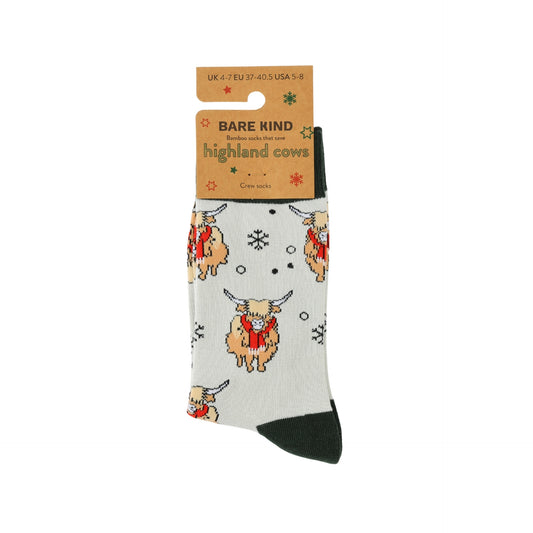
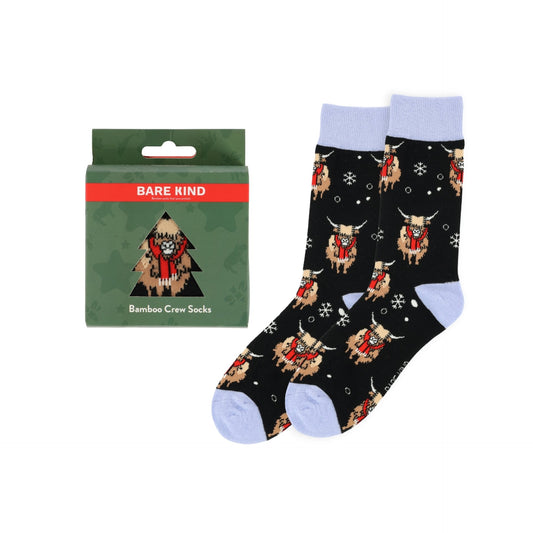
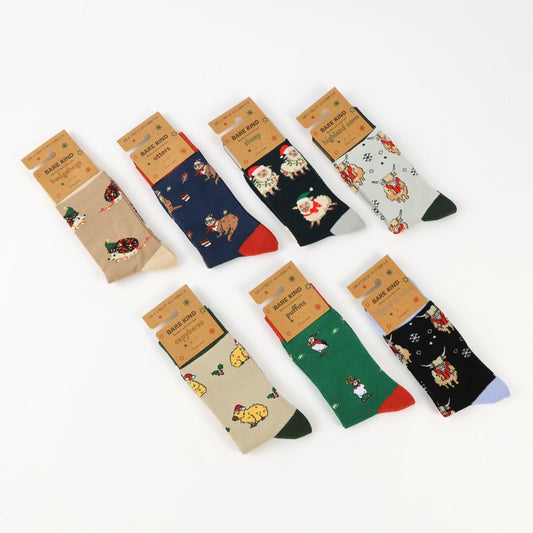
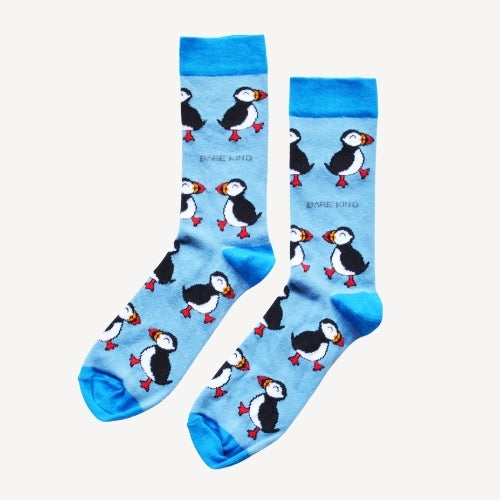
Love puffins? There's a sock for that. Obsessed with Highland cows? There's one for that too. Know somebody who can't stop talking about capybaras? Well, you can probably guess where this is going.
At Bare Kind, we love the idea that something as ordinary as a pair of socks can bring someone joy. That's why we make colourful bamboo socks featuring animals from around the world. Additionally, we donate 10% of the profits from every pair to help save the animal on the socks.
So when you give someone Bare Kind socks, you're giving them something comfortable that reflects their personality and supports animal conservation. Not bad for a present that fits neatly inside a Christmas stocking!
Conclusion: Socks Were Never a Boring Gift After All
When you think about it, the history of sock-giving is really a story about kindness. The meaning has always been bigger than the socks themselves. They’ve grown to represent warmth, care, generosity and the simple pleasure of making somebody's day a little better.
Perhaps that's why, centuries later, we're still wrapping them up and putting them under Christmas trees.
The next time somebody gives you socks for Christmas, remember that you're taking part in a tradition with a surprisingly lovely history.
-
Save the White Christmas Highland Cow Bamboo Socks
Regular price $17.00Regular priceSale price $17.00 -
Christmas Baubles Bamboo Socks
Regular price $17.00Regular price$17.00Sale price $17.00 -
Save the Christmas Sheep Bamboo Socks
Regular price $17.00Regular priceSale price $17.00 -
Everyday Day of the Week Christmas Baubles Bundle of 7
Regular price $103.00Regular price$115.00Sale price $103.00Sale
Invalid Password